

Potential implications of Carbon Dioxide Removal on the Sustainable Development Goals in the African and the Latin American and Caribbean regions
High-Level Political Forum Side Event
Tuesday, 13 July 2021 at 07:30-09:00 (EDT)
This side event is organised jointly by the Carnegie Climate Governance Initiative (C2G), the United Nations Economic Commission for Africa (UNECA) and the United Nations Economic Commission for Latin America and the Caribbean (UN-ECLAC) during the High-Level Political Forum (HLPF), to catalyse a discussion on the potential implications of Carbon Dioxide Removal (CDR) approaches on the Sustainable Development Goals (SDGs) in the African and the Latin American and Caribbean (LAC) regions. A panel of experts will analyse their benefits and risks so countries can make informed decisions whether any of these approaches may be useful to incorporate in their Nationally Determined Contributions (NDC) implementation plans and Long-Term Strategies (LTS) to attain the Paris Agreement goals.
The meeting of the HLPF in 2021 will be held from Tuesday, 6 July, to Thursday, 15 July 2021, under the auspices of the United Nations Economic and Social Council. The theme will be “Sustainable and resilient recovery from the COVID-19 pandemic that promotes the economic, social and environmental dimensions of sustainable development: building an inclusive and effective path for the achievement of the 2030 Agenda in the context of the decade of action and delivery for sustainable development”.
Background
While awareness of the global climate emergency is growing, a persistent gap remains between international commitments and pathways to the 1.5-2°C goal of the Paris Agreement (PA). According to the Intergovernmental Panel on Climate Change (IPCC), greater emissions reduction ambition is needed if we are to avoid exceeding the 1.5ºC threshold.
Climate change impacts and responses are closely linked to sustainable development and in addition to a primary focus on emissions reductions and adaptation, carbon dioxide removal approaches — both nature-based and through technological innovation — can be used to remove residual CO2 from the atmosphere.
An array of CDR approaches are being considered. These include (but are not limited to): afforestation and reforestation; land restoration and carbon sequestration in soil; Bioenergy with Carbon Capture and Storage (BECCS); Direct Air Capture and Carbon-Dioxide Storage (DACCS); and enhanced weathering and ocean alkalinity. Currently, these techniques differ widely in terms of maturity, potential, costs, risks, benefits, and governance requirements. Knowing their viability and sustainability to advance towards the achievement of the climate goals of the Paris Agreement could be the starting point for their application at different scales.
In the context of the forthcoming Conference on Climate and Development in Africa (23rd-27th August), and in preparation for COP26, African and LAC countries are considering the best options that can help them reduce their carbon emissions, achieve net zero while also accelerating the achievement of the SDGs.
Based on the findings of a recent study commissioned by UN-ECLAC and C2G, this side event will give an overview of these approaches and will analyze some of their known potential benefits and risks in the context of the Sustainable Development Goals. This information will allow decision-makers to identify knowledge gaps that need to be filled so they can consider the most suitable techniques to be incorporated in the new generation of NDC and LTS.
Agenda
| Agenda item | Speaker |
| Opening remarks and introductions | Janos Pasztor, Executive Director, Carnegie Climate Governance Initiative (C2G) |
| What is CDR and what do the different approaches consist of? | Alia Hassan, Outreach Officer, Carnegie Climate Governance Initiative (C2G) |
| Potential implications of CDR approaches on the achievement of the SDGs | Leah Wanambwa, Senior Policy Officer, Directorate of Sustainable Environment and Blue Economy, African Union Commission |
| Knowledge gaps: lessons learned from the UN-ECLAC case study | Estefani Rondón, Division of Sustainable Development and Human Settlements, United Nations Economic Commission of Latin America and the Caribbean (UN-ECLAC) |
|
An African private sector perspective
|
James Mwangi, Executive Director, Dalberg Group |
| Q&A | All |
| Closing remarks | Jean Paul Adam, Director, Technology, Climate Change and Natural Resource Management Division, United Nations Economic Commission for Africa (UNECA) |
Speakers
Janos Pasztor, Executive Director, Carnegie Climate Governance Initiative (C2G)
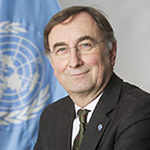 Janos Pasztor (a Hungarian and a Swiss citizen) is Senior Fellow of the Carnegie Council for Ethics in International Affairs, and is Executive Director of the Carnegie Climate Governance Initiative (C2G).
He has four decades of work experience in the areas of energy, environment, climate change, and sustainable development. Before taking up his current assignment he was UN Assistant Secretary-General for Climate Change in New York under Secretary-General Ban Ki-moon.
Earlier, he was Acting Executive Director for Conservation (2014), and Policy and Science Director (2012-2014), at WWF International. He directed the UNSG’s Climate Change Support Team (2008-2010) and later was Executive Secretary of the UNSG’s High-level Panel on Global Sustainability (2010-2012). In 2007 he directed the Geneva-based UN Environment Management Group (EMG). During 1993-2006 he worked and over time held many responsibilities at the Climate Change Secretariat (UNFCCC), initially in Geneva and later in Bonn.
His other assignments included: the Secretariat of the UN Conference on Environment and Development (Earth Summit ’92); Stockholm Environment Institute; United Nations Environment Programme (UNEP); Secretariat of the World Commission on Environment and Development (Brundtland Commission); the Beijer Institute; and the World Council of Churches.
He has BSc and MSc degrees from the Massachusetts Institute of Technology (MIT).
Alia Hassan, Outreach Officer, Carnegie Climate Governance Initiative (C2G)
 Alia Hassan is an international relations expert. With over 10 years of experience in Latin America and the Middle East, she is specialized in sustainability, education and culture, working with governments and international organizations to build strategic alliances. Before joining C2G, Alia worked with UNDP as Project Coordinator where she supported the Government of Ecuador’s efforts to strengthen the country’s climate change governance.
Alia holds a MSc Degree in Political Science from the University of Quebec in Montreal, and a BSc in Communication Science from the University of Montreal.
Leah Wanambwa, Senior Policy Officer, Environment, Climate Change, Water, and Land Management Division, African Union Commission
 LLeah Wanambwa Naess is a Senior Policy Officer in the Environment, Climate Change, Water, and Land Management Division at the African Union Commission Headquarters in Addis Ababa, Ethiopia. She is specifically working on climate change, conservation of Africa’s Wild Fauna and Flora (wildlife) and biodiversity portfolios. Leah has over 15 years of experience working on environmental policy, advocacy and communication. Prior to joining the African Union Commission, she worked at the United Nations Environment Programme (UNEP) in Nairobi, Kenya and the Greenbelt Movement, an NGO in Kenya.
Estefani Rondón, Climate Change Unit, Sustainable Development and Human Settlements Division, Economic Commission for Latin America and the Caribbean (UN-ECLAC)
 Estefani Rondón Toro is a consultant at the Climate Change Unit in the Sustainable Development and Human Settlements Division of the United Nations Economic Commission for Latin America and the Caribbean (UN-ECLAC). She is actually developing a PhD in Environmental Engineering at Cantabria University, Spain. She specializes in climate change, air quality, water and waste management, circular economy and sustainable development.
James Mwangi, Executive Director, Dalberg Group
 James Irungu Mwangi is the Executive Director of the Dalberg Group, and a Partner with Dalberg Advisors. James established Dalberg’s presence in Africa, beginning with the Johannesburg office in 2007, and has continued to expand its footprint on the continent, with offices in Nairobi in 2008, and Dakar in 2009. James also served as Global Managing Partner and Chief Executive of Dalberg’s consulting business from 2010 to 2014.
Prior to Dalberg, James worked at McKinsey & Company. He is a 2009 Archbishop Tutu Leadership Fellow of the African Leadership Institute, a 2013 Young Global Leader of the World Economic Forum and a member of the Young Presidents’ Organization. He also currently serves as a member of the Global Entrepreneurs Council of the UN Foundation.
James holds an AB Hons Degree in Economics from Harvard University.
Jean Paul Adam, Director, Technology, Climate Change and Natural Resource Management Division, United Nations Economic Commission for Africa (UNECA)
 Jean-Paul Adam is the Director for Technology, Climate Change and Natural Resources Management in the United Nations Economic Commission for Africa. Prior to taking on this role, he served in the Government of the Republic of Seychelles in several Cabinet positions. He was Minister of Health from 2016 to 2019. He served as Minister of Finance, Trade and the Blue Economy from 2015 to 2016 where he negotiated a debt for climate change adaptation swap and launched the process for Seychelles to become the first issuer of a Blue Bond. Between 2010 and 2014, he was Seychelles’ Minister of Foreign Affairs, where he advocated for countries to embrace the concept of the Blue Economy, to improve sustainability for island and coastal countries. Before entering the Cabinet, between 2005 and 2009, he occupied several senior roles in the Office of the President of the Republic of Seychelles including Director General for presidential affairs, Principal Secretary for the Office of the President and Secretary of state in the presidency. He started his career as a career diplomat in the Ministry of Foreign Affairs between 2001 and 2004. He is a holder of a Masters in International Political Economy form the University of Manchester (UK) and a BA in English Literature and French from the University of Sheffield (UK).
Highlights
“How can the African continent address the knowledge gaps around Carbon Dioxide Removal approaches?”
Jean Paul Adam
Director, Technology, Climate Change and Natural Resources Management in the United Nations Economic Commission for Africa (UNECA)
“What role can carbon dioxide removal play in Africa’s development?”
James Irungu Mwangi
Executive Director, Dalberg Group, and Partner, Dalberg Advisors
“What are the main governance gaps of carbon dioxide removal in Africa? “
Leah Wanambwa Naess
Senior Policy Officer, Environment Climate Change, Water and Land Management Division, African Union Commission
“How might Carbon Dioxide Removal approaches impact Sustainable Development? “
Estefani Rondón Toro
Consultant, Climate Change Unit in the Sustainable Development and Human Settlements Division of the United Nations Economic Commission for Latin America and the Caribbean (UN-ECLAC)
“What does the Carnegie Climate Governance Initiative mean by governance of Carbon Dioxide Removal?”
Janos Pasztor
Senior Fellow, Carnegie Council for Ethics in International Affairs, and Executive Director, Carnegie Climate Governance Initiative (C2G)
“Carbon Dioxide Removal could foster the route towards a green recovery in developing countries.”
Jean Paul Adam
Director, Technology, Climate Change and Natural Resources Management in the United Nations Economic Commission for Africa (UNECA)
“How do you envisage the carbon market evolving and how can it support a larger workforce?”
James Irungu Mwangi
Executive Director, Dalberg Group, and Partner, Dalberg Advisors
“Multilateralism and inclusion are key to identify opportunities for carbon dioxide removal.”
Leah Wanambwa Naess
Senior Policy Officer, Environment Climate Change, Water and Land Management Division, African Union Commission
“Could Carbon Dioxide Removal approaches translate into a practical opportunity?”
Estefani Rondón Toro
Consultant, Climate Change Unit in the Sustainable Development and Human Settlements Division of the United Nations Economic Commission for Latin America and the Caribbean (UN-ECLAC)


