

 C2GLearn
Solar Radiation Modification and the Sustainable Development Goals
This topic aims to raise awareness of potential large-scale deployment of proposed Solar Radiation Modification (SRM) technologies and their impacts on the delivery of the Sustainable Development Goals (SDGs) to an audience somewhat familiar with the basic concepts of SRM. It seeks to help participants to explore the following questions:
- What are the potential implications (physical, socio-economic or political) of a possible deployment of SRM for delivering the SDGs?
- What knowledge/research gaps exist around SRM and its potential implications for delivery of the SDGs?
- What governance gaps would need to be addressed to maximise positive impacts and minimise negative trade-offs with regards to the SDGs?
- How might some of the governance challenges be considered or addressed in the context of current governance processes and mechanisms?
Webinars
This Webinar will feature three ten-minute expert overviews of SRM approaches, and their impacts on the delivery of the SDGs. It will be followed by a half hour moderated Q&A session, during which audience members will be invited to submit written questions via the Zoom chat. Speakers include:
Paulo Artaxo / Brazil
 Paulo Artaxo is a professor of environmental physics at the Institute of Physics, University of São Paulo, Brazil. He works on climatic effects of aerosols in Amazonia, looking at how the forest interacts with atmospheric processes. These include changes in the radiation balance, cloud properties and biogeochemical cycles. We study the process of generating natural biogenic aerosol particles as well as biomass burning emissions over Amazonia.
Matthias Honegger / Switzerland
 Matthias Honegger is a research associate with the Institute for Advanced Sustainability Studies, climate policy consultant with Perspectives Climate Research, and PhD candidate at Utrecht University. After his Masters in environmental sciences from the Swiss Federal Institute of Technology he has worked on sectoral mitigation policies, national mitigation targets, UNFCCC negotiations and the emerging governance of geoengineering. Matthias researches differences in climate policy negotiators’ and observers’ views of solar geoengineering and carbon removal, their roots in diverging values and worldviews and the resulting tensions between popular expectations, economic models and actual policy planning and implementation. He is author and co-author on several articles, commentaries and reports on issues of policy design for carbon dioxide removal and solar radiation management geoengineering and has led the first assessment of potential effects that deployment of such technologies could have on the pursuit of the entirety of the Sustainable Development Goals.
Holly Buck / United States of America
 Holly Buck is an Emmett Climate Engineering Fellow in Environmental Law and Policy at UCLA School of Law for 2019-2020, and Assistant Professor of Sustainability and the Environment at University of Buffalo beginning Fall, 2020. Her research focuses on environmental sociology, science and technology studies, and international agriculture and rural development. She received her B.A. from the University of Maryland Baltimore County, her M.Sc. in Human Ecology from Lund University in Sweden, and her Ph.D. in Development Sociology from Cornell University.
Moderator: Qi Zheng / China
 Qi ZHENG has over 8 years of experience working on climate change and development. She is an Outreach Officer at C2G in charge of engaging governments and intergovernmental organisations. Qi previously worked as programme manager for the UK Committee on Climate Change on a UK-China cooperation on climate risks. Prior to that, she spent 5 years in China working as policy officer on climate change for the British Embassy in Beijing and as campaign officer for Oxfam Hong Kong.
Introduction
Presentations
Slide presentations
- Paulo Artaxo How does the Intergovernmental Panel on Climate Change approach Solar Radiation Modification? [pdf]
- Matthias Honegger Key SRM approaches and their implications for delivering the SDGs [pdf]
- Holly Buck Solar Radiation Management and the Sustainable Development Goals [pdf]
Q&A
Campfire Chat
This Campfire Chat aims to provide insights into diverse viewpoints on Solar Radiation Modification and the Sustainable Development Goals (presented in the webinar above), in a relatively informal, moderated, semi-structured discussion between experts. Audience members are invited to suggest topics via the Zoom chat. Guests include:
Ambuj Sagar / India
 Ambuj Sagar is the Vipula and Mahesh Chaturvedi Professor of Policy Studies and the founding Head of the School of Public Policy at the Indian Institute of Technology Delhi.
Ambuj’s interests broadly lie at the intersection of technology and development. His recent work has focused on innovation policy for meeting sustainability and inclusivity challenges, energy innovation policy and strategies (in areas such as biofuels, clean cookstoves, coal power, automobiles, and institutional mechanisms such as climate innovation centers), climate change policy and politics, capacity development, higher education policy, and the technology-society interface. He has been a consultant/advisor to various Indian Govt. ministries as well as many multilateral and bilateral agencies.
Ambuj did his undergraduate studies in Mechanical Engineering at IIT Delhi. He subsequently received an M.S. in Aerospace Engineering from the University of Michigan and then an M.S. in Materials Science, a Ph.D. in Polymer Science, and an M.S. in Technology and Policy from the Massachusetts Institute of Technology.
Charles Mwangi / Kenya
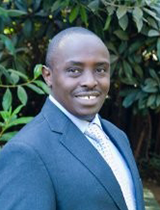 Charles Mwangi is a climate change specialist leading a continental program at Pan African Climate Justice Alliance (PACJA) on capacity building for civil society organisations on REDD+, funded by Forest Carbon Partnership Facility (FCPF) through World Bank. He coordinates the project in 18 FCPF countries in Africa with National level activities in 10 countries which include: Togo, Nigeria, Burkina Faso, Ivory Coast, Ethiopia, Central Africa Republic, Republic of Congo, Gabon, Mozambique and Madagascar. He is also a thematic lead on resilient people, society and economies in Africa where he coordinates all PACJA country platforms in the continent.
Holly Buck / United States of America
Holly Buck is an Emmett Climate Engineering Fellow in Environmental Law and Policy at UCLA School of Law for 2019-2020, and Assistant Professor of Sustainability and the Environment at University of Buffalo beginning Fall, 2020. Her research focuses on environmental sociology, science and technology studies, and international agriculture and rural development. She received her B.A. from the University of Maryland Baltimore County, her M.Sc. in Human Ecology from Lund University in Sweden, and her Ph.D. in Development Sociology from Cornell University.
Matthias Honegger / Switzerland
Matthias Honegger is a research associate with the Institute for Advanced Sustainability Studies, climate policy consultant with Perspectives Climate Research, and PhD candidate at Utrecht University. After his Masters in environmental sciences from the Swiss Federal Institute of Technology he has worked on sectoral mitigation policies, national mitigation targets, UNFCCC negotiations and the emerging governance of geoengineering. Matthias researches differences in climate policy negotiators’ and observers’ views of solar geoengineering and carbon removal, their roots in diverging values and worldviews and the resulting tensions between popular expectations, economic models and actual policy planning and implementation. He is author and co-author on several articles, commentaries and reports on issues of policy design for carbon dioxide removal and solar radiation management geoengineering and has led the first assessment of potential effects that deployment of such technologies could have on the pursuit of the entirety of the Sustainable Development Goals.Pablo Suarez / Argentina
 Pablo Suarez is Associate director for research and innovation at the Red Cross/Red Crescent Climate Centre, as well as visiting fellow at the Boston University Pardee Center for the Study of the Longer-Range Future, honorary senior lecturer at University College London, faculty member at University of Lugano (Switzerland), and Artist in Residence at the National University of Singapore (NUS-IPUR). He has consulted for the UN Development Programme, the World Food Programme, the World Bank, Oxfam America, and about twenty other international humanitarian and development organizations, working in more than 60 countries. Since 2009 he has been actively engaged in dialogue processes about solar geoengineering – focusing on humanitarian concerns. His current work addresses institutional integration across disciplines and geographic scales, and the use of innovative tools for climate risk management – ranging from financial instruments for faster disaster preparedness, to self-learning algorithms for flood prediction, to collaboration with artists and designers to inspire thinking and action. Pablo holds a water engineering degree, a master’s in planning, and a Ph.D. in geography.
Janos Pasztor / Hungary & Switzerland (Moderator)
 Janos Pasztor (a Hungarian and a Swiss citizen) is Senior Fellow of the Carnegie Council for Ethics in International Affairs, and is Executive Director of the Carnegie Climate Governance Initiative (C2G).
He has four decades of work experience in the areas of energy, environment, climate change, and sustainable development. Before taking up his current assignment he was UN Assistant Secretary-General for Climate Change in New York under Secretary-General Ban Ki-moon.
Earlier, he was Acting Executive Director for Conservation (2014), and Policy and Science Director (2012-2014), at WWF International. He directed the UNSG’s Climate Change Support Team (2008-2010) and later was Executive Secretary of the UNSG’s High-level Panel on Global Sustainability (2010-2012). In 2007 he directed the Geneva-based UN Environment Management Group (EMG). During 1993-2006 he worked and over time held many responsibilities at the Climate Change Secretariat (UNFCCC), initially in Geneva and later in Bonn.
His other assignments included: the Secretariat of the UN Conference on Environment and Development (Earth Summit ’92); Stockholm Environment Institute; United Nations Environment Programme (UNEP); Secretariat of the World Commission on Environment and Development (Brundtland Commission); the Beijer Institute; and the World Council of Churches.
He has BSc and MSc degrees from the Massachusetts Institute of Technology (MIT).
C2G strives to achieve a diversity of views and backgrounds across all its events. To that end, it is always open to feedback and suggestions regarding future participants and topics, to ensure a range of perspectives by sector, gender, race, geography, age and other dimensions. It will not always achieve the necessary diversity in all circumstances due to issues of availability and familiarity, but aims over time to expand the range of contributors able to address its issues, subject to the broad principles outlined in its mission statement.


